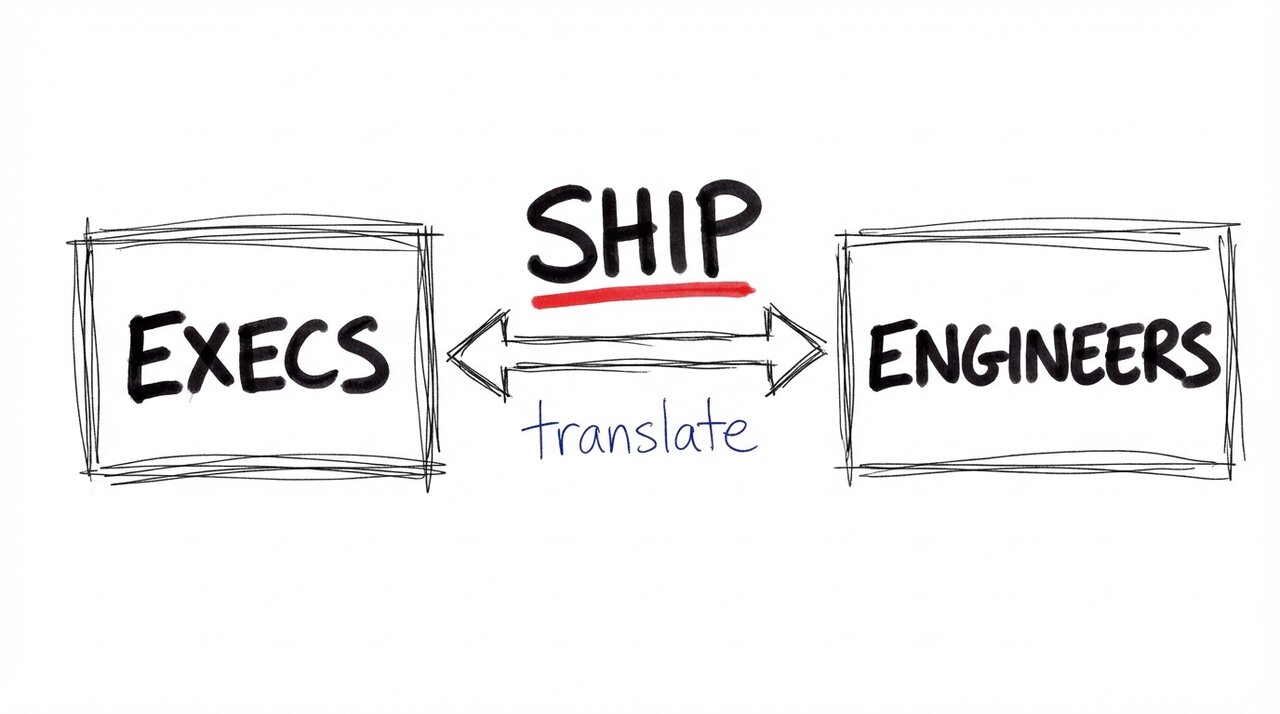
Most companies are about to hire someone called an “AI engineer.” They will build features that have models in them. Some of those features will work.
The companies that actually move ahead will hire someone different. Not the person who ships AI features to customers, but the person who wires agents into the work that’s already happening inside the building. The CRM. The ticket queue. The onboarding flow. The weekly report that someone has stitched together from four tools for the last six years.
You don’t bring automation to a job. You bring it to a process. That requires a role most companies haven’t hired for yet.I’m a Senior Developer Advocate at a fintech. Engineer first, staying on the bleeding edge of how AI changes the work. I’m not quitting tomorrow. This is a what’s-next post: the role I want, why it’s about to matter at almost every company serious about AI, and why I’m built for it.
The Role Most Companies Haven’t Named Yet
Picture an engineer embedded with a function inside the company. Sales, ops, support, finance, recruiting.
That function runs on a stack of real systems:
- A CRM (HubSpot, Salesforce)
- An HR or finance tool (Workday, NetSuite)
- A support platform (Zendesk, Intercom)
- A data warehouse with a BI layer on top (Snowflake, Looker)
- An internal app nobody has rewritten since 2019
- Three Google Sheets that act as a database
The gaps between those tools are filled by people doing copy-paste work.
The engineer’s job is to wire agents into that stack . Not write a chatbot. Not add an “AI tab” to a SaaS dashboard. The actual work:
- Model the workflow as it really runs, not as the org chart shows it
- Codify it into skills the agent can execute
- Build the integrations between the systems involved
- Own the result in production, with real data and real consequences
This is, first, a deeply technical role . Not a project manager who knows what AI is. Not a business analyst with a Cursor subscription. The person writes production code, reasons about auth boundaries and rate limits, and designs systems that stay secure, governed, and observable when they touch live business data.
It’s also embedded. They have to understand the business process well enough to model it accurately, sit with the people who run it, and adjust the system when reality pushes back.
The names floating around right now: internal forward-deployed engineer, outcome engineer, agent operator, director of agents, ops engineer . None of them have settled. I lean on “internal FDE” because the FDE pattern is already a known thing. Palantir, Anthropic, and OpenAI all use it for customer-facing technical roles. Internal FDE is the same shape, applied inward.
The label matters less than the work. The work is wiring agents into existing business processes, with one foot in engineering and one foot in the function being served.
Why This Role Is About to Matter
Most AI efforts inside companies stall for structural reasons, not talent. Two failure modes show up over and over.
Failure #1: One person owns everything. Strategy, stakeholder alignment, and shipping all land on the same desk. That person lives in meetings and ships nothing. Or the work gets contracted out, comes back as a polished demo, and six months later nothing is wired into the systems people actually use.
Failure #2: AI gets bolted onto a single job. “Give support a chatbot.” “Give sales an AI assistant.” The work doesn’t live in one job. Support tickets span four systems. Sales ops has three handoffs. What moves the number is automating the process, not the role.
Both failures point to the same fix: someone embedded, technical, and accountable end-to-end. Not a consultant. Not a feature team.
It’s also a real career. The natural path runs through head of ops or chief product officer, because nobody else in the company ends up understanding both the technical surface and the business processes this well.
Why I’m Built For This
I’ve spent my career making other people more productive by codifying their workflows into things they can reuse. APIs, workshops, internal tools, skills.
In DevRel, that audience is millions of developers. The pattern is the same: take a capability, understand how someone wants to use it, package the path so they don’t have to figure it out from scratch. Internal FDE is the same job applied to one company instead of millions of devs.
I also build this way for myself. Every workflow I notice repeating becomes a skill or an agent.
A handful of things I run today:
- An agent that monitors my production server logs and proactively flags bugs for review
- A bookmark agent that organizes the links, tools, and articles I save without me curating them
- A project-naming agent that takes an idea and finds available domains for it
- A set of skills that writes commit messages structured for future search and review
- A read-only database agent that drafts reusable queries and recommends indexes worth adding to production
- An MCP server for my personal UI toolkit so design agents stay on-brand
- An orchestration layer that normalizes across providers, handles retries, and runs tool-calling loops with context budget enforcement
These aren’t demos. They run. They get used. They get rewritten when they break. It’s software engineering, not prompting. Productizing workflows, not chatting.
I’ve also been embedded with non-engineering teams my whole career.
At First Look Media I built secure tools for investigative journalists with wildly varying technical comfort, where adversarial input and real risk shaped every design choice. In consulting I worked with marketing teams to frame voice for developer audiences and built field tools for sales teams. At Jack Henry I spent five years sitting between engineering and business in a regulated fintech, translating capabilities into decisions and decisions into plans teams could execute. At IBM Watson I delivered 150+ hands-on workshops, watching impressive demos stall before production because of integration debt and weak observability.
What I’m Looking For
The setups where I do my best work share a few traits:
- Small teams with clear ownership
- Tight feedback loops from idea to release
- Honest metrics that decide what stays and what gets cut
- Real production stakes, not theater
I want to build the function, not slot into a finished one. The companies pulling this off in 2026 are the ones treating it as a discipline to invent, not a job description to copy.
Reach Out
Already running agents in production and want to do more? Building the function from scratch and need someone to define it? Either way, I’d like to talk.
I bring shipping discipline, systems thinking, and the ability to keep executives aligned while the team builds the thing.
Email: sam@samcouch.com